

Care Package for Someone Grieving: Comfort & Support
When someone experiences loss, finding the right words feels impossible. A care package for someone grieving offers a tangible way to show support when language fails. These thoughtfully assembled gifts demonstrate presence, compassion, and understanding during one of life's most challenging experiences. Unlike traditional sympathy gestures, a well-crafted care package addresses both immediate comfort needs and longer-term emotional wellness, creating a lasting reminder that the grieving person is not alone in their journey.
Understanding the Unique Needs of Someone Who Is Grieving
Grief manifests differently for each person, affecting physical health, emotional stability, and daily functioning. Many bereaved individuals struggle with basic self-care tasks, experience disrupted sleep patterns, and face diminished appetite. Supporting loved ones who are grieving requires recognizing these multifaceted challenges and responding with practical assistance rather than empty platitudes.
The grieving process often involves waves of intense emotion interspersed with numbness. Physical symptoms may include fatigue, headaches, digestive issues, and weakened immunity. Understanding these realities helps guide the selection of items for a care package for someone grieving that truly addresses their needs.
The Timeline of Grief Support
Support requirements change as grief evolves through different stages. Immediate needs differ significantly from those emerging weeks or months after a loss.
Early Days (First Two Weeks)
- Focus on practical necessities
- Provide ready-to-consume nourishment
- Offer comfort items for physical relief
- Include tools for managing overwhelming emotions
Ongoing Support (Weeks to Months)
- Address longer-term healing needs
- Include self-care encouragement
- Provide memory preservation items
- Offer resources for continued support
Essential Components of a Grief Support Care Package
Creating an effective care package for someone grieving requires balancing practical necessities with emotional comfort. The most impactful packages contain items serving multiple purposes while respecting the recipient's unique situation.
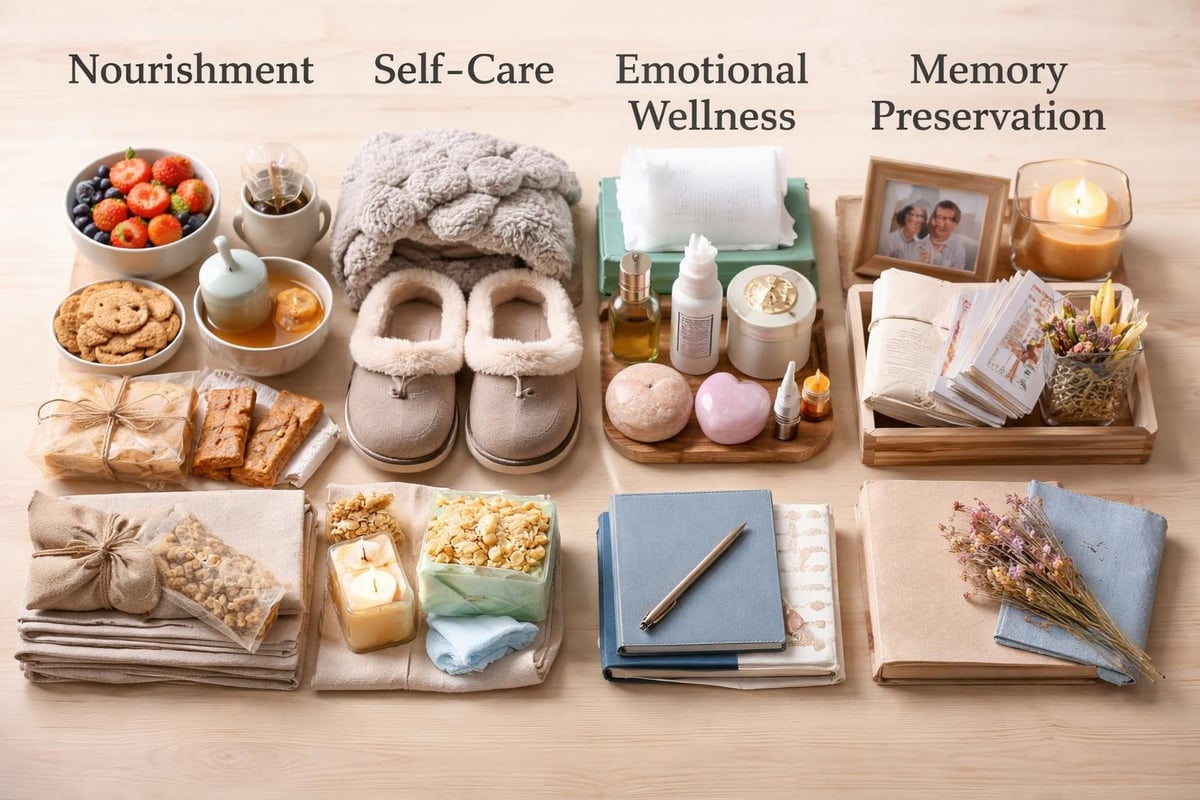
Nourishment and Hydration Items
Grieving individuals often neglect eating and drinking. Simple, ready-to-consume options remove barriers to basic nutrition.
- Premium herbal teas (chamomile, lavender, peppermint) for relaxation and hydration
- Nutrient-dense snacks requiring no preparation
- Honey sticks or quality honey for soothing and sweetness
- Shelf-stable soups that provide warmth and comfort
- Electrolyte packets for maintaining hydration during stress
Healthy care packages demonstrate how nourishing options can be both comforting and beneficial to overall wellness during difficult times.
Physical Comfort Essentials
Physical discomfort compounds emotional pain. Items that soothe the body provide measurable relief.
| Item Category | Purpose | Examples |
|---|---|---|
| Warmth | Provides security and reduces tension | Soft blankets, heating pads, cozy socks |
| Aromatherapy | Calms anxiety and promotes relaxation | Essential oils, scented candles, room sprays |
| Skincare | Encourages gentle self-care | Moisturizing lotion, lip balm, hand cream |
| Sleep Support | Addresses insomnia and restlessness | Eye masks, pillow sprays, earplugs |
Emotional Wellness and Mental Health Support
How to support someone who is grieving involves acknowledging the profound emotional work required during bereavement. A care package for someone grieving should include resources that validate feelings while gently encouraging healing.
Journaling and Expression Tools
Processing grief often requires external outlets for overwhelming emotions. Providing tools for expression offers healthy coping mechanisms.
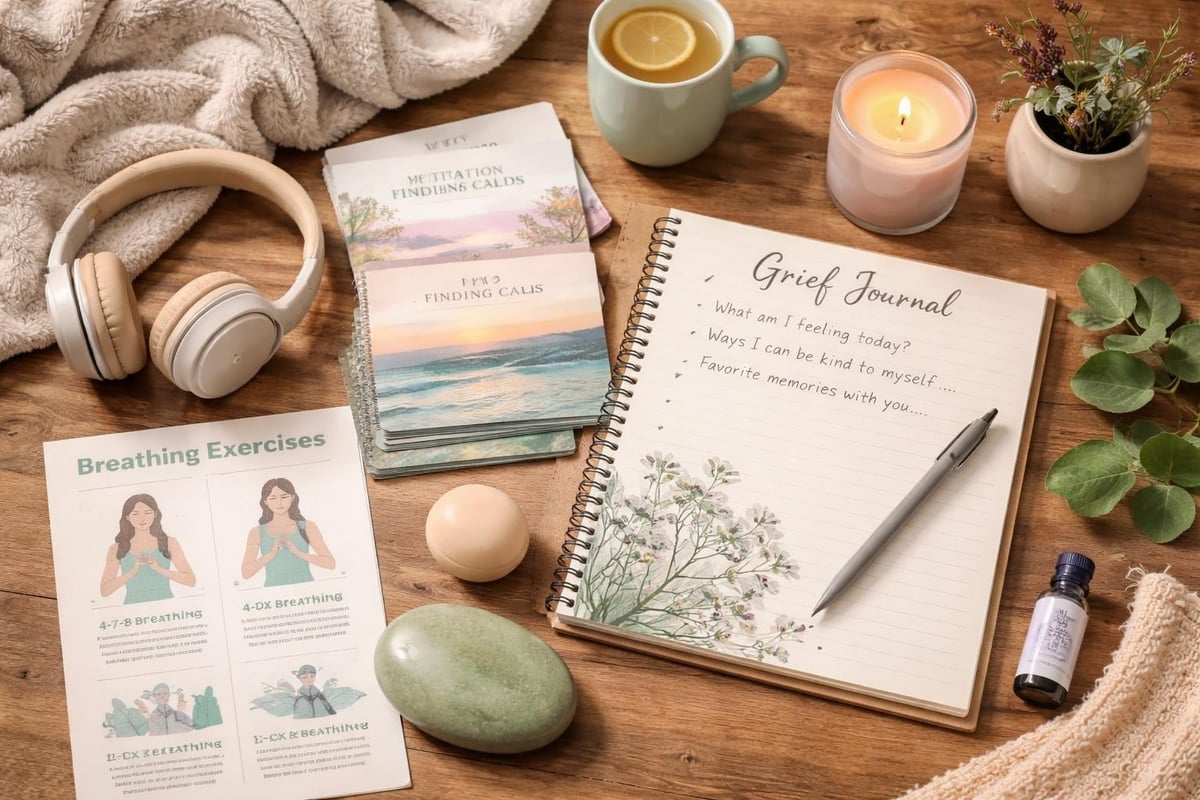
Journal prompts specific to grief work help organize chaotic thoughts and feelings. Include a high-quality notebook with a comforting texture and perhaps some prompts written on cards to guide initial entries. Many grieving individuals find that putting words to their experience reduces the internal pressure of unexpressed emotion.
Art supplies for non-verbal expression serve those who struggle to articulate their feelings. Colored pencils, watercolors, or adult coloring books provide therapeutic activities that engage the mind without demanding verbal processing.
Mindfulness and Grounding Resources
Anxiety and panic attacks frequently accompany acute grief. Tools for managing these symptoms provide immediate practical value.
- Stress balls or fidget items for physical grounding
- Breathing exercise cards with simple techniques
- Guided meditation audio links or QR codes
- Calming music playlists curated for grief support
- Weighted eye pillows for rest periods
Partners In Care discusses practical assistance as a cornerstone of grief support, emphasizing how tangible tools can ease daily struggles.
Personalization Based on Relationship and Loss Type
The most meaningful care package for someone grieving reflects awareness of their specific circumstances. Different types of loss require different approaches to support.
Loss of a Parent
Adults grieving a parent often face additional responsibilities while processing profound loss. Include items that acknowledge their dual burden.
Practical additions: Meal delivery gift cards, house cleaning service vouchers, organizational tools for managing estate matters, and self-care reminders for those prioritizing others' needs over their own.
Loss of a Spouse or Partner
This devastating loss disrupts every aspect of daily life. Focus on items that address extreme loneliness and practical challenges of solo living.
Thoughtful inclusions: Single-serving meal options, connection tools like pre-stamped notecards for reaching out, memory preservation materials, and resources for widow/widower support groups.
Loss of a Child
This unnatural loss requires the most sensitive approach. Prioritize items that honor the child's memory while supporting impossible grief.
Meaningful items: Memory boxes, special ornaments or keepsakes, books specifically addressing parental grief, and donations to relevant charities in the child's name.
Timing and Delivery Considerations
The most thoughtful care package for someone grieving arrives when support typically wanes. Most people receive overwhelming attention immediately following a loss, then face abandonment as others return to normal life.
Strategic Timing Options
| Timeframe | Purpose | Focus |
|---|---|---|
| Immediate (1-2 weeks) | Address crisis needs | Practical necessities, comfort items |
| Medium-term (1-3 months) | Fill the support gap | Continued care, memory items |
| Long-term (6-12 months) | Honor ongoing grief | Remembrance items, healing resources |
| Anniversary dates | Show remembrance | Thoughtful gestures acknowledging the date |
Care package delivery ensures that support reaches recipients exactly when needed, providing consistent presence throughout the grieving journey.
Presentation and Messaging
How you present a care package matters as much as its contents. Avoid overly cheerful packaging that feels dismissive of grief's weight.
Appropriate presentation elements include neutral, calming colors, simple elegant packaging, and minimal decorative elements. The focus should remain on the contents and intention rather than elaborate presentation.
Messaging considerations require particular care. Avoid phrases like "everything happens for a reason" or "they're in a better place." Instead, use simple, honest language: "Thinking of you," "You're not alone," or "No words, just love."
Practical Items That Demonstrate Ongoing Support
How to help someone who is grieving emphasizes the importance of specific, practical assistance over vague offers to help. Including practical items transforms good intentions into actionable support.
Household and Daily Living Support
Grief exhausts mental and physical energy, making routine tasks feel insurmountable. Items that reduce daily burdens provide measurable relief.
Cleaning and organization: All-purpose cleaning wipes, paper products for reduced dishwashing, laundry detergent pods requiring no measuring, and trash bags in various sizes.
Food preparation simplification: Disposable plates and utensils, single-serve coffee pods, instant oatmeal packets, and no-cook protein options like nut butter packets.
Communication and Connection Tools
Maintaining relationships requires energy that grieving individuals lack. Provide tools that facilitate connection without demanding excessive effort.
- Pre-addressed, stamped thank-you notes for acknowledgments
- Phone card or prepaid minutes for long-distance calls
- Video chat setup assistance card with simple instructions
- List of grief support hotlines and text services
- QR codes linking to online grief communities
Memory Preservation and Legacy Items
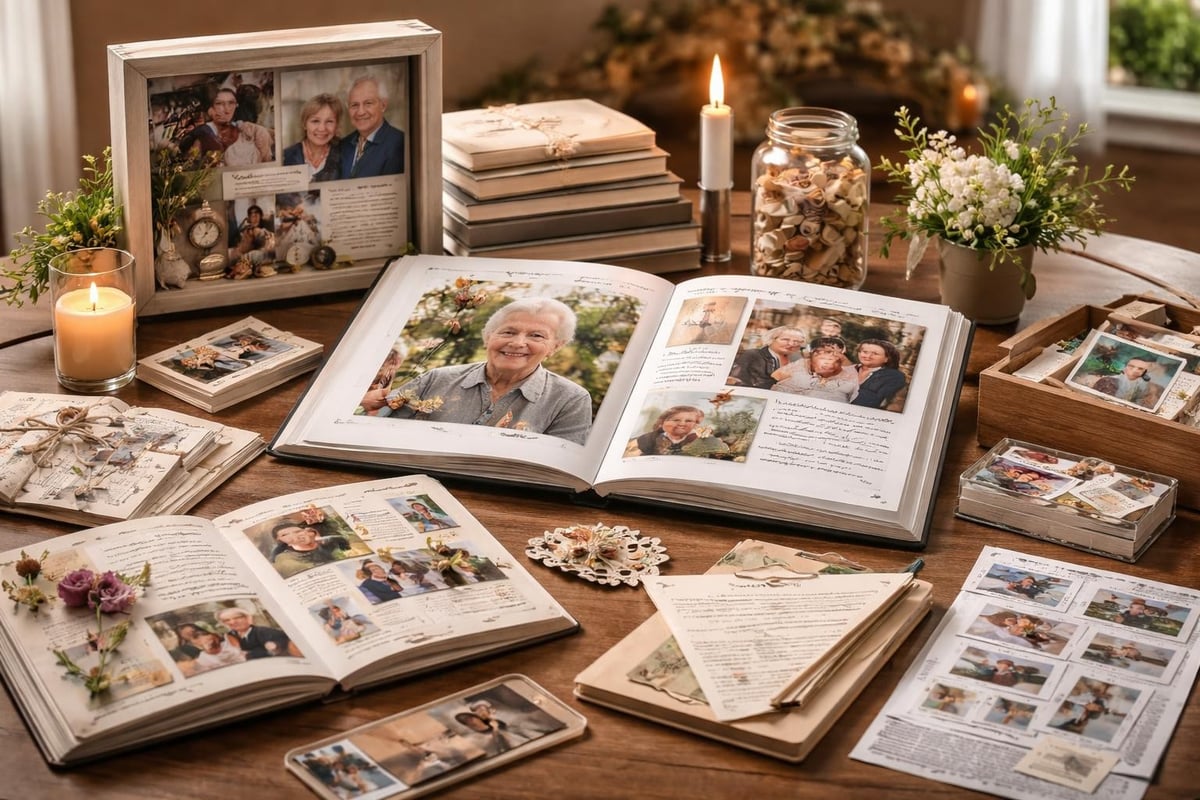
A care package for someone grieving can include items that help preserve precious memories while honoring the person lost. These elements acknowledge that remembering is part of healing.
Documentation and Preservation Materials
Photo organization supplies help gather and preserve visual memories. Include archival-quality photo albums, acid-free storage boxes, or digital scanning service gift cards for deteriorating photos.
Memory book materials provide structure for recording stories and reflections. A beautiful blank book with prompts like "My favorite memory of..." or "What I learned from..." helps organize thoughts while creating a lasting tribute.
Symbolic Remembrance Items
Certain objects carry powerful symbolic meaning that comforts grieving hearts. Choose items that create ongoing connection to the person lost.
Memorial jewelry such as fingerprint pendants, cremation jewelry, or birthstone pieces keeps the deceased symbolically close. Plantable memorial items like seed paper or memorial trees create living tributes that grow and change, reflecting the ongoing nature of love beyond death.
Self-Care Encouragement Without Pressure
Grieving individuals often feel guilty prioritizing their own needs. A care package for someone grieving should encourage self-care while acknowledging that healing happens gradually, not on demand.
Gentle Self-Care Prompts
Include items with built-in permission for self-kindness. Attach notes like "For when you need 10 minutes of peace" to a bath bomb, or "No guilt allowed" to a premium chocolate bar.
Low-barrier activities require minimal energy while providing genuine benefit. Face masks, foot soaks, or hand massagers offer self-care that doesn't demand emotional availability or sustained effort.
Permission for All Feelings
Include a carefully worded card acknowledging that grief has no timeline or "proper" way to manifest. Validate whatever the person feels, including anger, relief, numbness, or conflicting emotions.
Supporting someone who is grieving involves accepting their experience without judgment, a principle that should guide every element of the care package.
Professional Resources and Extended Support
Beyond physical items, connecting grieving individuals with professional support demonstrates comprehensive care. Include carefully vetted resources that require minimal effort to access.
Grief Counseling and Support Groups
Information cards with local grief counselors, support group details, and online therapy options provide pathways to professional help. Include brief descriptions helping recipients understand what each resource offers.
Financial assistance information for grief counseling helps those concerned about costs. Many communities offer sliding-scale services or grief support scholarships that remain unknown to those who need them.
Educational Resources on Grief
Books about grief can provide validation and framework for understanding the experience. Choose titles carefully, avoiding those that prescribe specific timelines or stages.
Recommended categories: Memoirs by others who've experienced similar loss, practical guides for navigating grief's challenges, and books addressing specific aspects like grief's physical symptoms or supporting children through loss.
Creating Care Packages for Different Budgets
Meaningful support doesn't require expensive items. A care package for someone grieving succeeds through thoughtfulness rather than monetary value.
Budget-Conscious Options ($25-50)
| Item | Cost | Impact |
|---|---|---|
| Homemade soup in freezer containers | $10-15 | High - practical nourishment |
| Handwritten letters for future opening | $0-5 | Very high - emotional connection |
| Downloaded meditation app subscription (1 month) | $10-15 | Medium - mental health support |
| Cozy socks and tea variety pack | $15-20 | Medium - physical comfort |
Mid-Range Packages ($50-100)
These packages balance variety with quality, including multiple categories of support items. Combine shelf-stable nourishment, physical comfort items, one or two memory preservation materials, and professional resource information.
Premium Support Packages ($100+)
Higher budgets allow for specialized items like massage gift certificates, premium meal delivery services, professional photography for family portraits, or memorial jewelry from specialized artisans. Care packages for friends demonstrates how investing in quality creates lasting impact.
Common Mistakes to Avoid
Even well-intentioned supporters make errors that diminish a care package's effectiveness. Awareness of these pitfalls improves the support provided.
What Not to Include
Religious items unless you're certain about the recipient's beliefs. Grief can complicate faith, and unwanted religious materials may alienate rather than comfort. Overly cheerful items that feel dismissive of appropriate sadness. Items requiring immediate action or response create pressure during a time when decision-making feels impossible.
Messaging Missteps
Avoid cards with pre-printed messages suggesting the person should "stay strong" or "be grateful for the time you had." These invalidate genuine grief. Similarly, never include expectations for acknowledgment or thanks. Harvard Health outlines ways to support emphasizing that support should be offered freely without expectation of reciprocation.
Following Up After Delivery
Sending a care package for someone grieving represents one moment of support. Sustained assistance requires ongoing presence and availability.
Check-In Strategies
Reach out consistently without demanding responses. Send brief texts saying "Thinking of you today" or "No need to reply, just want you to know I'm here." These maintain connection without creating obligations.
Specific offers work better than "Let me know if you need anything." Instead, say "I'm grocery shopping Thursday. Can I pick up anything for you?" or "I have Tuesday afternoon free. May I drop off dinner?"
Recognizing When Professional Help Is Needed
Watch for signs that grief has become complicated or dangerous, including prolonged inability to function, substance abuse, suicidal ideation, or complete social withdrawal. Having professional resources readily available in the initial care package facilitates these conversations when needed.
Seasonal and Anniversary Considerations
Grief intensifies during specific times: holidays, birthdays, death anniversaries, and other significant dates. Planning care packages around these difficult periods demonstrates exceptional awareness.
Holiday Support Packages
The first holidays without a loved one feel particularly brutal. A care package acknowledging this pain while offering comfort helps recipients feel less alone in their struggle.
December/holiday season items: Memory ornament, journal prompts for holiday grief, self-care permission cards for skipping traditions, and resources for holiday grief support groups.
Anniversary Care Packages
The anniversary of a death often brings unexpected emotional intensity. Sending a care package showing you remember honors both the person lost and the one grieving.
Include items focused on memory and reflection: a framed copy of a meaningful quote, a donation receipt to a cause the deceased cared about, or materials for creating a memory ritual.
Special Considerations for Different Demographics
Age and life circumstances affect grief's expression and support needs. Tailoring a care package for someone grieving based on demographic factors increases relevance and impact.
Supporting Grieving Seniors
Older adults may face compounding losses and social isolation. Include items addressing practical challenges like large-print grief resources, simple-to-open packaging, mobility-friendly comfort items, and information about senior-specific grief programs.
Supporting Younger Adults
Millennials and Gen Z may prefer different support approaches, including digital resources, modern self-care items, and connection to online grief communities. Consider including app subscriptions, contemporary books on grief, and tech-enabled memorial options.
Supporting someone through grief requires presence, patience, and practical assistance. A care package for someone grieving transforms these principles into tangible comfort, addressing physical needs while honoring emotional pain. When you need a thoughtfully curated solution that genuinely helps, FEELBETTERGIFTS offers premium care packages designed to provide meaningful support during life's most challenging moments. Each package combines comfort items with healing resources, creating connections that remind grieving individuals they don't walk this difficult path alone.