

Care Package for Surgery Recovery: Essential Guide 2026
Surgery recovery is a challenging journey that requires physical healing, emotional support, and practical assistance. Whether a loved one is preparing for a minor outpatient procedure or major surgery, a thoughtfully assembled care package for surgery recovery can make a significant difference in their healing experience. These curated collections of essential items provide comfort during difficult moments, reduce stress about daily needs, and remind the recipient that someone cares deeply about their wellbeing. Understanding what to include and how to personalize these packages ensures your gesture provides genuine support during a vulnerable time.
Understanding Post-Surgery Recovery Needs
Recovery from surgery involves multiple dimensions of healing that extend beyond the surgical site itself. Physical discomfort, restricted mobility, emotional vulnerability, and practical challenges all converge during the weeks following a procedure. According to Enhanced Recovery After Surgery guidelines, patients benefit most from comprehensive support that addresses pain management, nutrition, movement, and psychological wellbeing simultaneously.
The Physical Recovery Timeline
Different surgeries require different recovery periods, but certain patterns remain consistent across procedures. Most patients experience peak discomfort during the first 48-72 hours, followed by gradual improvement over subsequent weeks. During this time, they may struggle with:
- Limited mobility and range of motion
- Medication schedules and side effects
- Wound care and dressing changes
- Fatigue and decreased energy levels
- Appetite changes and dietary restrictions
The first week typically demands the most intensive care, while weeks two through six involve progressive rehabilitation. A well-designed care package for surgery recovery should account for needs across this entire spectrum, not just the immediate post-operative period.
Emotional and Psychological Considerations
Surgery triggers emotional responses that many people underestimate. Anxiety about outcomes, frustration with physical limitations, and feelings of helplessness can impact recovery as significantly as physical factors. The BayCare Health System's recovery booklet emphasizes that positive emotional states correlate with faster healing and better pain management outcomes.
Isolation poses another challenge, particularly for patients recovering at home. Thoughtful gifts that provide entertainment, connection, and distraction help combat loneliness and boredom during extended recovery periods.

Essential Items for Physical Comfort
Physical comfort forms the foundation of effective recovery. When assembling a care package for surgery recovery, prioritize items that address pain, mobility challenges, and basic daily activities.
Pain Management and Relief Tools
Temperature therapy provides drug-free pain relief that complements prescribed medications. Quality heating pads with automatic shut-off features soothe muscle tension and joint stiffness, while reusable gel ice packs reduce inflammation and swelling. Look for packs that remain flexible when frozen, allowing them to conform to different body areas.
Supportive pillows serve multiple purposes depending on surgery type:
- Wedge pillows elevate legs to reduce swelling
- Neck support pillows prevent strain during extended bed rest
- Body pillows provide positioning support for side sleepers
- Lumbar pillows offer back support when sitting
Soft, breathable fabrics prevent overheating and skin irritation during extended use. Consider including pillowcases that match the patient's preferences for added personalization.
| Comfort Item | Primary Benefit | Best For |
|---|---|---|
| Heating pad | Muscle relaxation, pain relief | Back, joint, abdominal surgeries |
| Ice packs | Reduce inflammation, numb pain | Orthopedic, plastic surgeries |
| Compression socks | Prevent blood clots, reduce swelling | Lower body surgeries |
| Eye masks | Light blocking, improved sleep | All surgery types |
Clothing and Personal Care Adaptations
Post-surgery clothing requirements differ dramatically from everyday wardrobes. Button-front shirts eliminate the need to raise arms overhead, while loose elastic-waist pants accommodate bandages and swelling without pressure. For those exploring hospital care package options, consider including non-slip slipper socks with grip bottoms for safe mobility.
Personal hygiene becomes challenging when mobility is restricted. Dry shampoo, body wipes, and long-handled sponges maintain cleanliness without requiring full showers. Unscented products reduce the risk of nausea, which many patients experience from anesthesia aftereffects and pain medications.
Nutrition and Hydration Support
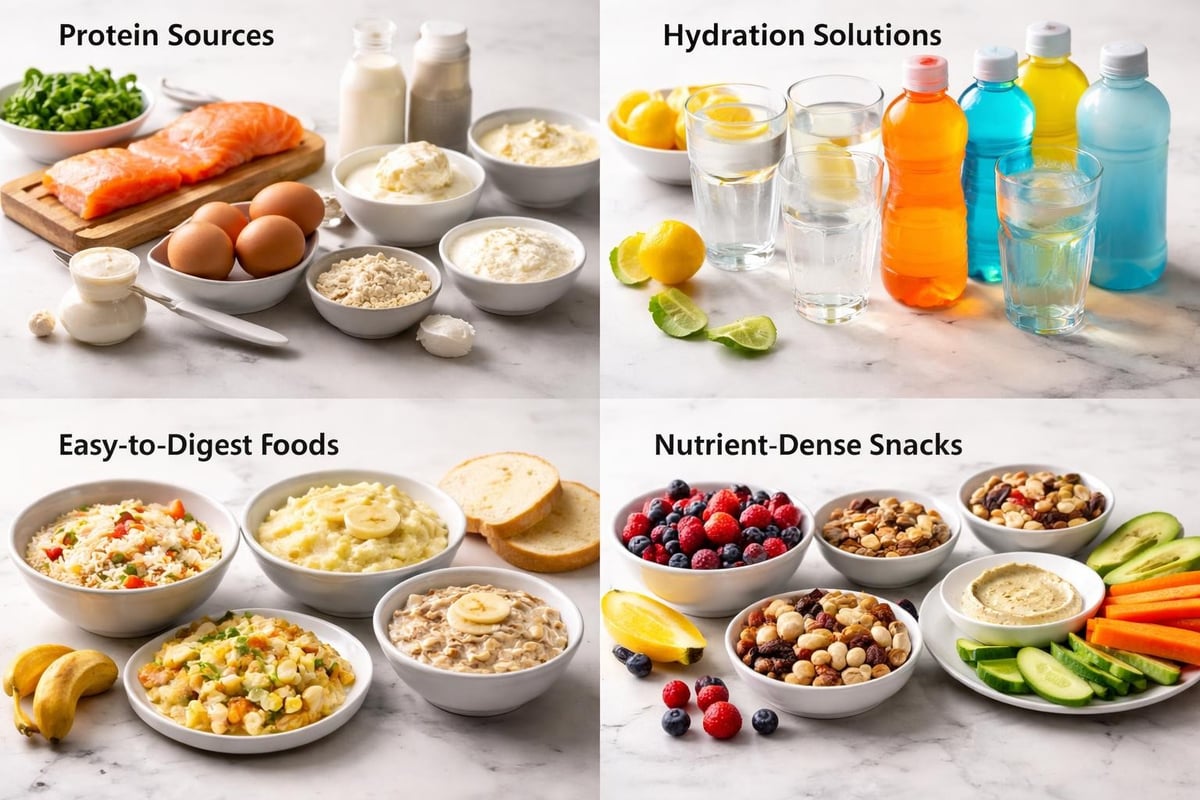
Proper nutrition accelerates healing by providing the building blocks for tissue repair and immune function. The Kaiser Permanente Enhanced Recovery program emphasizes that adequate protein intake and hydration significantly impact recovery speed.
Convenient, Nutritious Food Options
Recovery often brings reduced appetite alongside increased nutritional demands. Small, frequent meals prove more manageable than traditional portions. Include items that require minimal preparation:
- Individual protein shake bottles or powder packets
- Bone broth in single-serve containers
- Nut butter packets for quick protein
- Herbal tea variety packs
- Electrolyte drink mixes
Avoid heavily processed snacks that provide empty calories. Instead, focus on nutrient-dense options like trail mix with dried fruit and nuts, protein bars with whole ingredients, and whole grain crackers.
Hydration Tools and Reminders
Insulated water bottles with easy-open lids and straws reduce spill risk and eliminate the need to sit up fully for drinking. Some models include time markers encouraging regular hydration throughout the day. For patients with restricted movement, consider bottles with handles for easier gripping.
Flavor enhancers make plain water more appealing when appetite is diminished. Natural fruit-infusion options or sugar-free flavor drops provide variety without compromising health goals.
Entertainment and Mental Engagement
Mental stimulation prevents the depression and anxiety that often accompany prolonged recovery periods. A comprehensive care package for surgery recovery addresses cognitive and emotional needs alongside physical ones.
Passive Entertainment Options
During the most challenging recovery days, patients may lack energy for active engagement. Audiobooks and podcasts provide entertainment without requiring visual focus or physical interaction. Subscription gift cards to popular platforms give recipients access to vast content libraries matching their interests.
Streaming service subscriptions enable binge-watching favorite shows or discovering new series. Consider the patient's preferences when selecting services, as content libraries vary significantly between platforms.
Interactive Activities for Stronger Days
As energy returns, more engaging activities prevent boredom and provide accomplishment:
- Adult coloring books with premium colored pencils offer creative expression without physical demands
- Puzzle books including crosswords, sudoku, and word searches exercise cognitive function
- Journals and quality pens encourage reflection and emotional processing
- E-readers or tablets preloaded with books or magazines
According to suggestions from Nerdbugs' after-surgery care package ideas, items that combine entertainment with gentle engagement yield the best results for maintaining positive outlooks during recovery.
Personal Touches and Emotional Support
The most meaningful care packages transcend functional items to include elements that demonstrate genuine understanding and affection. These personal touches often provide the greatest emotional impact.
Customized Comfort Items
Handwritten notes from multiple friends or family members create a collection of encouragement the recipient can revisit during difficult moments. Each note might share a favorite memory, express specific appreciation, or offer concrete support like meal delivery or errand assistance.
Photo collections in digital frames or small albums remind patients of happy times and provide conversation starters with visiting caregivers. Select images that evoke positive emotions and feature people important to the recipient's life.
The Allina Health knee replacement manual highlights the psychological benefits of strong support systems, noting that patients with engaged personal networks report better pain management and faster functional recovery.
Aromatherapy and Sensory Comfort
Essential oil rollers with calming scents like lavender, chamomile, or bergamot reduce anxiety and promote relaxation. Choose pre-diluted options ready for immediate use. Peppermint oil can combat nausea, a common post-surgical complaint.
Soft textiles including plush blankets, cozy socks, or silk eye masks engage the sense of touch positively. Premium materials like bamboo or cashmere feel luxurious while serving practical purposes.
Practical Daily Living Assistance
Recovery often means temporarily losing independence in routine tasks. Items that restore autonomy, even in small ways, significantly boost morale and confidence.
Mobility and Accessibility Tools
Bedside caddies organize essentials within arm's reach, eliminating dangerous stretching or attempts to stand unsupported. Multiple pockets accommodate medications, phones, remotes, reading materials, and water bottles simultaneously.
Reachers or grabbers extend functional reach by 24-32 inches, enabling patients to retrieve dropped items or access high shelves without assistance. Lightweight models with rubberized grips prevent slipping and reduce hand fatigue.
For patients recovering from lower body procedures, shower chairs and handheld showerheads transform bathing from a risky ordeal into a manageable task. Non-slip bath mats provide additional safety.
Organization Systems for Medications and Appointments
Pill organizers with multiple daily compartments prevent missed doses and accidental double-dosing. Weekly models with removable daily sections allow patients to carry just one day's medications when moving between rooms.
Recovery journals or appointment trackers help patients monitor symptoms, record questions for healthcare providers, and document progress. Structured formats with prompts work better than blank notebooks for people experiencing medication-related brain fog.
| Practical Tool | Problem Solved | Impact Level |
|---|---|---|
| Long-handled shoehorn | Difficulty reaching feet | High for lower body surgery |
| Button hook tool | Limited hand dexterity | Medium for upper body surgery |
| Phone mount for bed | Hands-free communication | High for all surgery types |
| Bedside lamp with touch control | Difficulty reaching switches | Medium for all surgery types |
Tailoring Packages to Specific Surgery Types
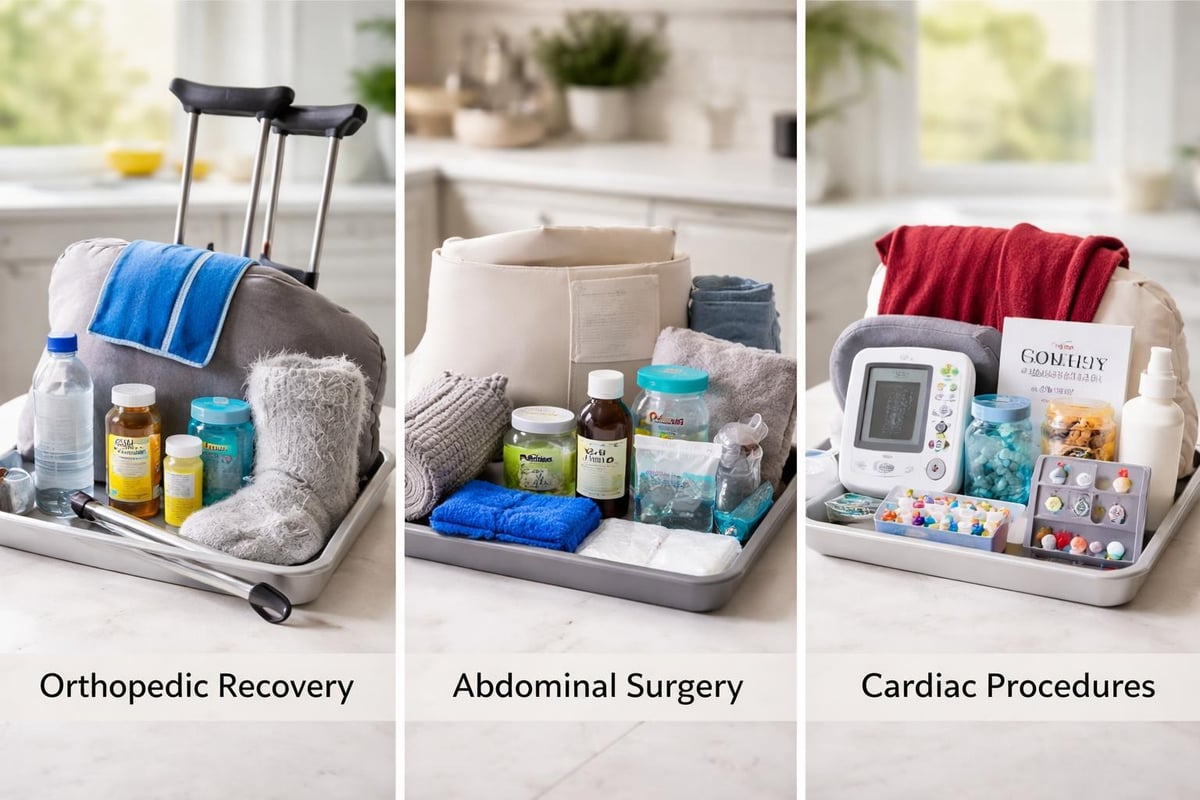
Different procedures create distinct recovery challenges requiring specialized support. A care package for surgery recovery should reflect the specific situation rather than following a one-size-fits-all approach.
Orthopedic Surgery Considerations
Joint replacement and other orthopedic procedures demand extended physical therapy and gradual mobility restoration. Include resistance bands for home exercises, ice therapy systems designed for joints, and compression garments matching the affected area. Therapy exercise guides with clear illustrations help patients perform prescribed movements correctly between appointments.
Abdominal Surgery Needs
Digestive system surgeries require careful dietary management during healing. Focus on gentle, bland foods initially, progressing to normal nutrition as tolerance improves. Abdominal binders provide incision support and reduce strain during movement. Gas-relieving products and anti-nausea remedies address common post-operative digestive issues.
Similar to a surgery recovery gift basket, packages for abdominal procedures should emphasize digestive comfort and gradual nutritional reintroduction.
Cardiac and Respiratory Surgery Adaptations
Heart and lung procedures often restrict lifting and reaching temporarily. Front-closing clothing becomes essential, as does specialized pillow support for sleeping in recommended positions. Incentive spirometers encourage proper breathing exercises critical for preventing complications.
Packaging and Presentation Best Practices
How you present items influences their perceived value and the emotional impact of your gift. Professional, thoughtful packaging demonstrates the care invested in selection and assembly.
Container Selection Strategies
Choose reusable containers that serve purposes beyond initial presentation. Decorative storage bins organize ongoing recovery supplies, while sturdy tote bags facilitate trips to follow-up appointments. Avoid containers requiring significant lifting or awkward handling for patients with mobility restrictions.
Baskets with handles offer classic appeal and easy transport between rooms. Line them with tissue paper or fabric in colors matching the recipient's preferences. Clear cellophane wrapping protects contents while displaying the thoughtful selection inside.
Organizing for Easy Access
Arrange items logically with immediate-need products most accessible:
- Top layer: Entertainment items, snacks, personal notes
- Middle layer: Comfort items like blankets, pillows, clothing
- Bottom layer: Longer-term supplies and backup items
Include a contents list explaining each item's purpose, especially for less obvious tools. This reference sheet helps caregivers locate specific items quickly and ensures nothing gets overlooked.
When considering options like those from FEELBETTERGIFTS, professional curation ensures optimal item combinations and presentation quality that individual assemblers might struggle to achieve.
Timing and Delivery Considerations
Perfect timing transforms a good gift into an exceptional one. Understanding recovery phases helps you deliver support when it matters most.
Pre-Surgery Delivery Benefits
Receiving a care package before surgery reduces pre-operative anxiety and demonstrates support during the anticipation period. Patients appreciate having comfort items already positioned in recovery spaces rather than scrambling to gather supplies while in pain.
Include a note explaining that you're thinking of them and confident in their recovery. Pre-surgery packages might emphasize preparation items like lip balm, phone chargers, comfortable clothing, and entertainment downloads.
Post-Surgery Timing Options
Immediate post-operative delivery (days 1-3) focuses on essential comfort and practical needs during the most challenging recovery phase. These packages should emphasize pain relief tools, easy nutrition, and passive entertainment.
Week two or three delivery addresses the often-overlooked middle recovery period when initial support fades but challenges persist. These packages might include more engaging entertainment, nutritious treats for returning appetite, and motivational items celebrating progress.
Consider care package delivery services that coordinate timing with hospital discharge or specific recovery milestones for maximum impact.
Budget-Friendly Assembly Approaches
Meaningful care packages need not strain finances. Strategic selection and creative sourcing create impressive results at various price points.
Cost-Effective Item Categories
Homemade elements add personal value without significant expense:
- Baked goods in patient-approved dietary categories
- Homemade soup frozen in single-serve portions
- Hand-sewn heating pad covers or pillowcases
- Curated playlist or podcast recommendations
Multipurpose items maximize value by serving multiple recovery needs. A quality throw blanket provides warmth, comfort during sitting, and emotional security. Herbal tea serves hydration, nutrition, and aromatherapy functions simultaneously.
Strategic Shopping Methods
Purchase seasonal items on clearance like cozy socks in spring or cooling products in fall. Generic store brands for items like electrolyte drinks and protein bars cost significantly less than name brands while providing identical nutritional benefits.
Bulk buying with friends or family assembling multiple packages reduces per-unit costs. Split larger containers of items like coconut water, protein powder, or trail mix into individual servings for multiple recipients.
Like options in get well packages, professionally curated solutions often provide better value than individual assembly when factoring in time, shipping, and bulk purchasing advantages.
Adding Professional Medical Guidance
While care packages primarily offer comfort and support, incorporating evidence-based recovery principles enhances their practical value.
Evidence-Based Recovery Resources
Include printed recovery guidelines specific to the patient's procedure type. Many health systems publish patient education materials covering exercises, dietary progression, and warning signs requiring medical attention. Laminated reference cards withstand repeated handling better than standard paper.
Medication tracking sheets help patients document doses, timing, and side effects. This information proves valuable during follow-up appointments when providers assess pain management effectiveness and adjust prescriptions.
Resources from Cold Case Ice Cream's post-surgery care package ideas emphasize balancing indulgent comfort items with practical recovery tools for comprehensive support.
Coordinating with Healthcare Teams
When possible, consult the patient's healthcare provider about specific restrictions or recommendations before finalizing package contents. Some surgeries require dietary limitations, activity restrictions, or specific wound care approaches that influence appropriate item selection.
Physical therapists can suggest exercise equipment matching prescribed rehabilitation programs. Occupational therapists offer insights into adaptive tools addressing specific mobility challenges the patient faces.
Long-Distance Care Package Considerations
Supporting loved ones recovering far away presents unique challenges requiring creative solutions and reliable logistics.
Shipping and Handling Requirements
Temperature-sensitive items like certain foods or gel packs need insulated packaging and expedited shipping during warm months. Choose shelf-stable alternatives when possible to reduce shipping complexity and costs.
Fragile comfort items require protective packaging preventing damage during transit. Wrap delicate items individually in bubble wrap and fill empty spaces with packing material preventing shifting.
Consider shipping directly from retailers to avoid double-handling and reduce transit time. Many online sellers offer gift wrapping and personalized notes, creating a polished presentation without requiring you to receive and reship items.
Services like those reviewed at Gift Selection Hub specialize in direct-ship packages combining professional presentation with convenient delivery.
Virtual Support Supplements
Complement physical packages with virtual connection through video calls, online game subscriptions for shared play, or streaming watch-party tools enabling simultaneous viewing despite distance.
Digital gift cards for meal delivery services provide practical nutrition support when you cannot cook or deliver food personally. Choose services operating in the patient's area with healthy menu options accommodating recovery dietary needs.
Exploring get well gift packages designed for direct shipping ensures professional presentation and reliable delivery regardless of distance.
Avoiding Common Care Package Mistakes
Well-intentioned gifts sometimes miss the mark due to overlooked considerations. Understanding common pitfalls helps you create truly helpful packages.
Items to Reconsider or Avoid
Heavily scented products trigger nausea in patients experiencing medication side effects or post-anesthesia sensitivity. Unscented or lightly scented alternatives prove safer choices.
Perishable foods without clear consumption timelines create waste and guilt. Avoid items requiring refrigeration unless you confirm adequate storage space and near-term consumption likelihood.
Complicated entertainment requiring extensive setup, learning curves, or sustained concentration overwhelms patients experiencing pain and medication effects. Simple, immediately accessible options work better during initial recovery phases.
Respecting Preferences and Restrictions
Dietary restrictions extend beyond medical requirements to include personal preferences and ethical choices. Verify vegetarian, vegan, kosher, halal, or allergy considerations before including any food items.
Lifestyle compatibility matters for non-food items too. A dedicated reader appreciates books more than someone who prefers video content. Customization based on genuine knowledge of the recipient's interests demonstrates thoughtfulness beyond generic gestures.
Solutions from resources like sick person care package guides balance universal appeal with customization flexibility for diverse recipient needs.
Creating an effective care package for surgery recovery requires balancing practical necessities with emotional support, evidence-based recovery principles with personalized comfort, and immediate needs with longer-term healing support. The most impactful packages demonstrate genuine understanding of the recipient's specific situation while providing tangible tools that facilitate healing and restore independence. FEELBETTERGIFTS specializes in thoughtfully curated care packages that address these multiple dimensions of recovery support, combining premium quality items with meaningful presentation to create gifts that genuinely help loved ones heal faster and feel deeply supported throughout their recovery journey.